Design Insights — September 28, 2026 — Interior Design Insights
5 Decorating Myths You Needto Stop Believing Right Now
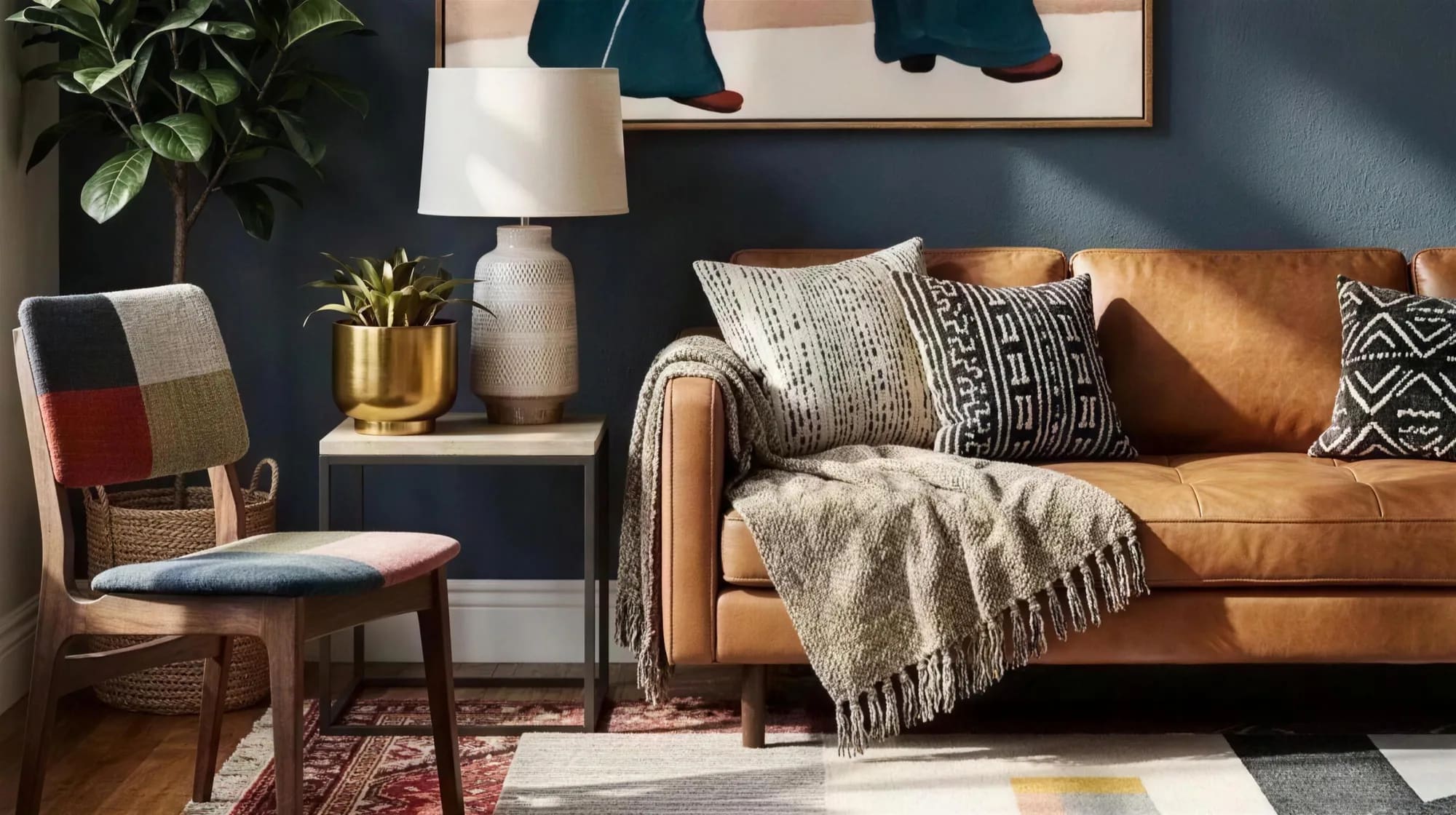
We’ve all heard them. Those dogmatic, golden rules of interior design passed down through real estate agents, home improvement shows, and well-meaning relatives: “Never paint a small room dark!” “All your wood tones must match!”
Following every rule in the book is a fast track to creating a space that feels less like your home and more like a staged waiting room. Decorating shouldn’t feel like taking a board exam. It’s time to break down five of the biggest home decor myths, and give you full permission to break every single one of them.
Myth 1: Small Rooms Must Be Painted White
The Reality: White paint isn’t a magical expander; it’s just a blank canvas.
The age-old advice says that painting a small space white will make it feel big and airy. But if a room lacks good natural light, white paint won’t fix it, it’ll just make it look flat, chalky, and slightly sad.
What to do instead: Lean into the cozy. A tiny powder room, den, or entry nook is the ultimate playground for moody colors. Deep navy, forest green, rich charcoal, or aubergine can blur the edges and corners of a room, creating an illusion of depth while making the space instantly sophisticated and dramatic. If a room wants to be cozy, let it!
Myth 2: Everything Needs to Match
The Reality: Matching sets belong in the showroom, not your living room.
Buying the entire matching living room set, sofa, loveseat, coffee table, and end tables, might feel like a quick win, but it deprives your home of personality. When every wood grain and fabric texture is identical, the room feels flat and uninspired.
What to do instead: Aim for cohesion, not uniformity. Mix your metals (brass looks gorgeous next to matte black or polished chrome) and blend your wood tones. The secret? Keep a common undertone, pair warm woods with warm woods, or cool undertones together, and vary the scale. Contrast brings a room to life.
Myth 3: Rugs Are Supposed to Fit Under All Your Furniture
The Reality: The “floating island” rug is actually the real living room killer.
People often buy small rugs because larger ones are expensive, leading to the dreaded “postage stamp” effect: a tiny rug floating in the center of the room with only the coffee table sitting on top. This actually shrinks your visual space. Conversely, thinking every single piece of heavy furniture must fit entirely on top of the rug can leave you hunting for an impossibly massive 12x15 rug.
What to do instead: Follow the Front-Legs-Only Rule. As long as the front two legs of your sofa and accent chairs sit firmly on the rug, the space feels anchored, grounded, and proportioned correctly.
Myth 4: Neutrals Are Always “Safe” and Easy
The Reality: An all-neutral room is actually one of the hardest design styles to pull off.
“I’ll just stick to beige and grey so I don’t mess it up.” We’ve all been there. But without intentional styling, an all-neutral room doesn’t look serene, it looks unfinished, washed out, or plain boring.
What to do instead: If you love a calm, neutral palette, texture is your best friend. Since you aren’t relying on bold color for contrast, you need to rely on tactile variety:
- Pair smooth leather with a chunky bouclé cushion.
- Balance raw, matte ceramics against polished marble or glass.
- Add natural woven fibers (jute, rattan, linen) to layer in richness.
Myth 5: You Have to Stick to One Design Style
The Reality: Pure, unadulterated “100% Mid-Century Modern” or “Strict Industrial” looks like a movie set, not a home.
Design labels are useful for search engines, but terrible for actual living spaces. If you strictly adhere to a single design style, your home misses out on story, evolution, and personal history.
What to do instead: Embrace the blend. The most dynamic spaces pair vintage with contemporary, sleek minimalist pieces with ornate traditional elements. A modern glass dining table surrounded by vintage wood chairs creates immediate visual interest. Decorate with items that speak to you, the style will naturally harmonize because you chose them.
The Takeaway
Your home should reflect how you live, not a rigid set of instructions from 1995. Rules are great guidelines when you’re starting out, but knowing when to toss them out the window is where true style begins. Next time someone tells you that you can’t put a dark wall in a hallway or mix chrome with gold, smile, and do it anyway.
Next article
10 Living Room Design MistakesMaking Your Space Look Smaller