


The Edit: Why the 2026 Bride and the Modern Home Share the Same DNA
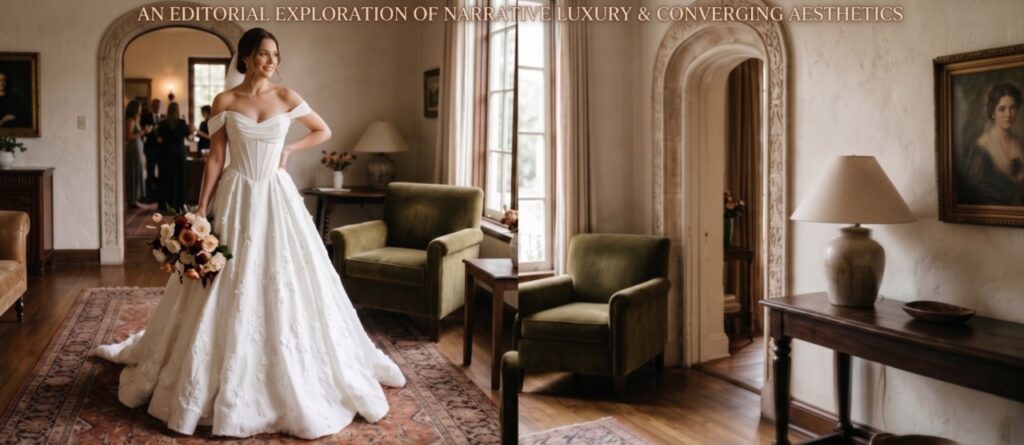
As designers, we rarely view creative disciplines in a vacuum. The curve of a chair speaks to the drape of a sleeve; the texture of a lime-washed wall mirrors the weave of an artisanal lace.
This year, the parallel lines of bridal fashion and interior design have converged into a singular, defining thesis: The death of sterile perfection and the resurrection of narrative luxury. We are officially leaving behind the clinical, hyper-minimalist “blank boxes” of the early 2020s. In their place, 2026 has ushered in a season of emotional warmth, architectural depth, and historical reverence. Here is how the 2026 aisle is mirroring the 2026 home.
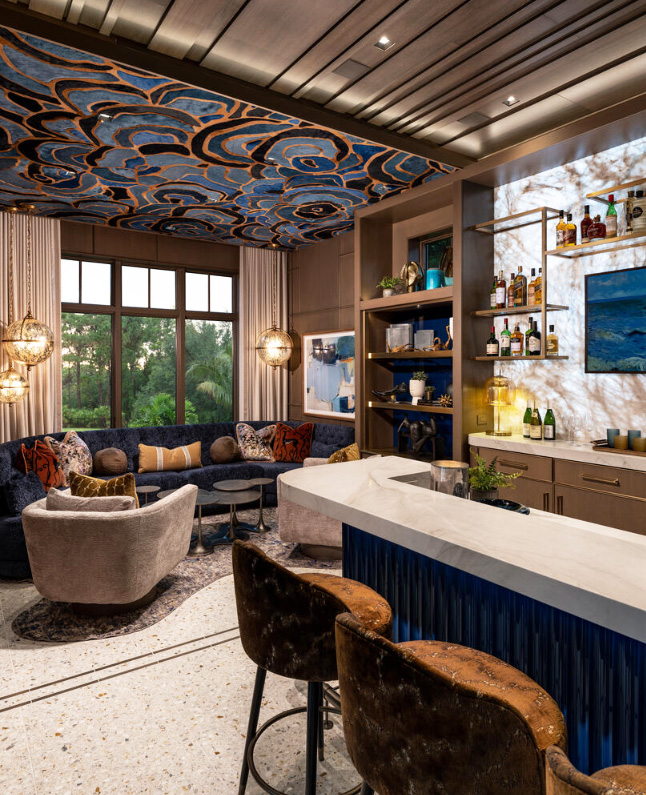
The Silhouette Shift: Basque Waists Meet Modern Heritage Architecture
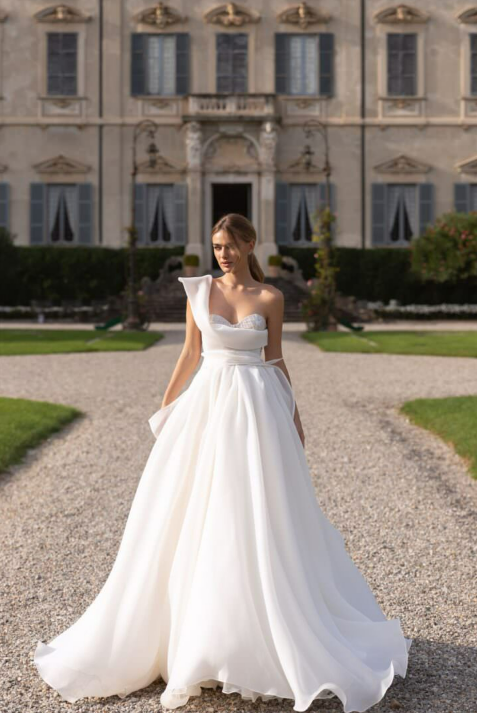
In bridal showrooms, the undisputed “it” silhouette of 2026 is the basque waist and the low-slung, dropped torso. Designers are leaning heavily into Modern Renaissance archetypes—think structured corsetry, deliberate boning, and heavy silk mikado pulling into a dramatic V-shape before exploding into voluminous, artfully considered skirts.
Step inside the 2026 home, and you will find the exact same architectural preoccupation. We are witnessing a massive revival of Modern Heritage—a trend defined by traditional millwork, deep crown mouldings, and raised-panel doors.
The Design Connection: Both industries are obsessed with framing. The same way a basque waist elongates and sculpts the human form, traditional interior millwork anchors a room, giving a space a sense of historical permanence and structural poetry rather than flat, stark emptiness.
2. Materiality: Luminescent Silks & The Return of Lived-In Finishes
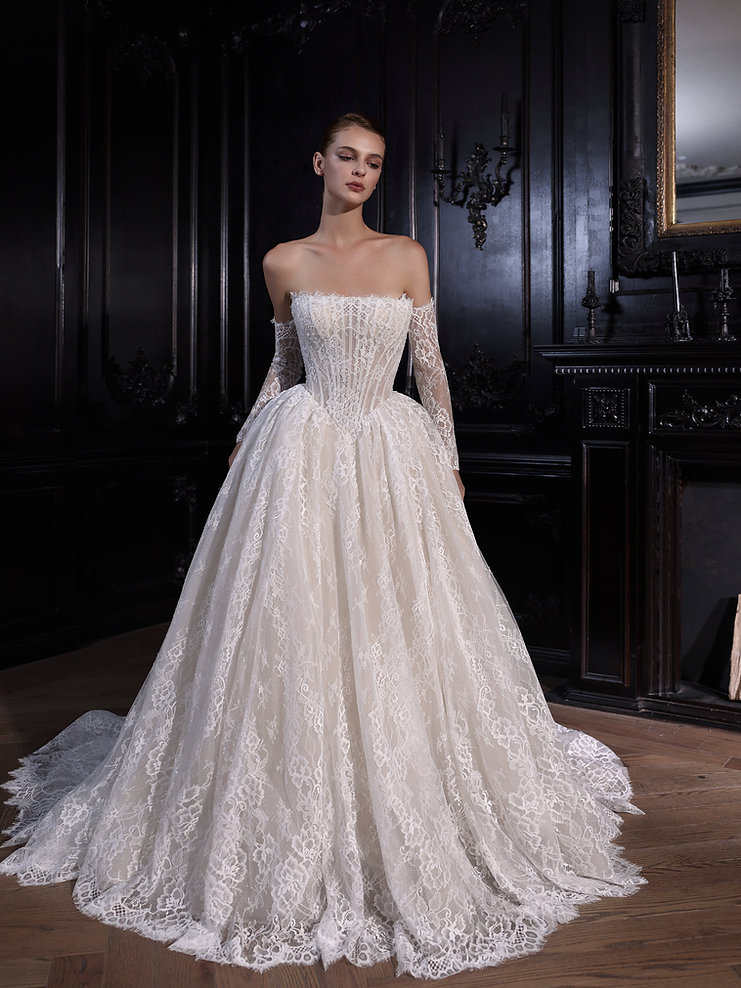
For a long time, bridal was dominated by hyper-pressed, stiff fabrics, while interiors fell victim to the sterile, indestructible gleam of engineered quartz and faux-oak laminates.
In 2026, we have collectively revolted against the synthetic.
- On the Runway: High-gloss finishes have been replaced by luminescent textiles. Brides are gravitating toward fluid silk charmeuse, matte silks, and liquid satins that catch candlelight with a soft, organic glow. Lace has undergone an artistic rewrite—burnout lace and three-dimensional, storybook floral appliqués dominate, offering tactile depth that feels alive.
- In the Home: Perfect, glossy surfaces are out; patina is in. Interior designers are swapping out quartz for deeply veined, high-maintenance marble that stains and tells a story. Walls are being swathed in textured plaster, grasscloth, and material-inspired wallpapers. Hardware has shifted entirely to unlacquered brass and living metals that oxidize over time.
Both worlds are celebrating the beauty of imperfection and the luxury of things that feel lived-in and loved.
3. The Palette: From Stark White to Moody Nostalgia
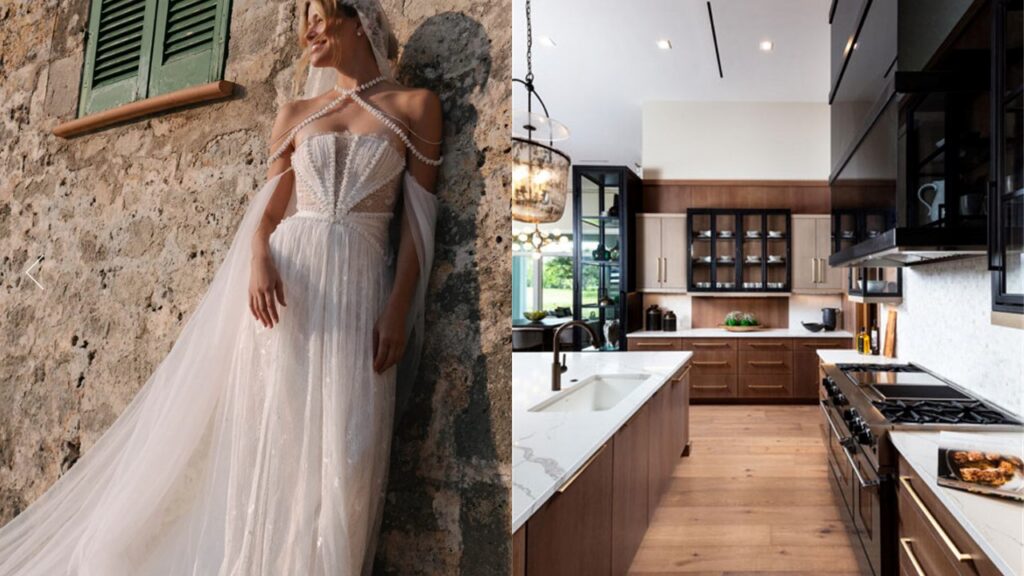
If you are designing a wedding or a living room in 2026 with a palette of stark white and cool gray, you are operating in the past.
| 2026 Design Domain | The Color Rebellion |
| Bridal Fashion | A massive shift toward warm off-whites, alabaster, and antique ivory. These tones add an immediate vintage depth, making a new gown feel like a treasured heirloom. |
| Interior Design | The total eclipse of the all-white kitchen. Spaces are swathed in rich, muddy, and enveloping tones: chocolate brown, terracotta, burgundy, and deep olive green. |
Even when 2026 interiors utilize neutrals, they are sandy, creamy, and inherently warm. The goal in both fashion and space is the same: to evoke an emotional, welcoming warmth rather than a cold, gallery-like detachment.
4. The Philosophy: Modular Wardrobes & Collected Maximalism
Perhaps the most fascinating crossover is how we are consuming these designs.
The modern bride is rejecting the “one-and-done” dress. The 2026 bridal wardrobe is modular, consisting of convertible silhouettes: detachable sleeves, sheer bridal capes that sub for veils, removable overskirts, and high-fashion separates. It’s an editorial curation of pieces that allow for transformation from the ceremony to the after-party.
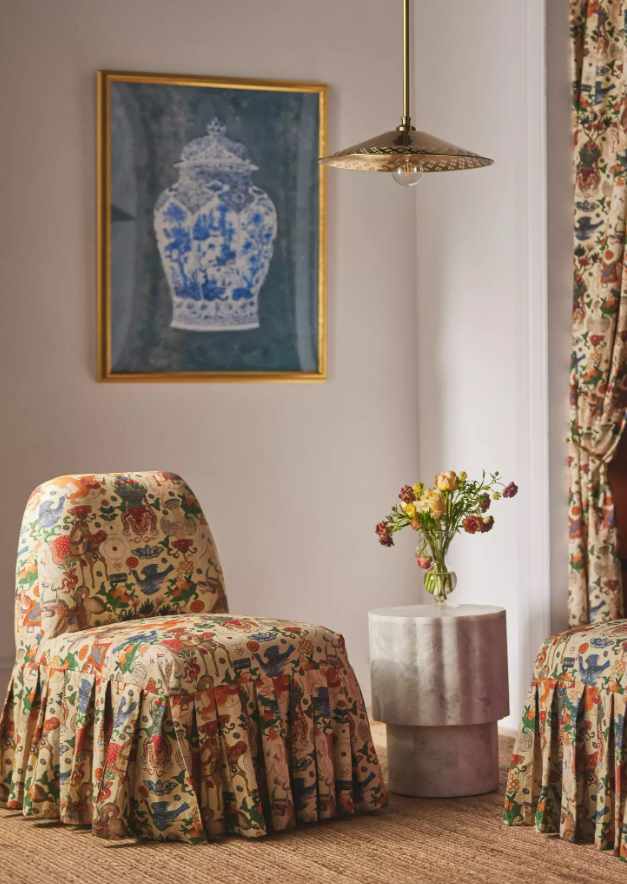
This directly mirrors the Maximalism with Meaning movement taking over interiors. Designers are no longer buying matching furniture sets (in fact, matching wood tones are officially dead). Instead, rooms are being curated with a “collected over time” philosophy. Vintage pieces clash beautifully with mid-century modern lighting; a contemporary sofa is paired with a ruffled, “Grandma Chic” statement armchair.
Whether you are walking down an aisle or walking through your front door in 2026, the directive from the design vanguard is loud and clear: Reject the generic. Embrace the heavy drape of silk, the historical weight of a sculpted line, the warmth of an earthy palette, and the soulfulness of a space—or a gown—that feels like it has a story to tell.